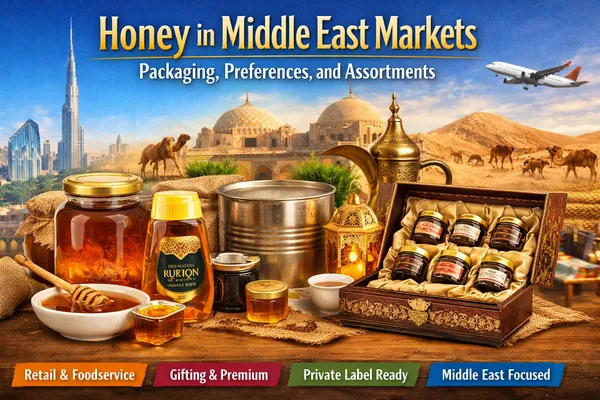
“Middle East markets” is not one buyer behavior. For sourcing and portfolio decisions, the most useful approach is to segment by channel (modern retail, traditional trade, foodservice), price architecture (everyday vs premium), and occasion (breakfast daily use vs gifting). When you align packaging and SKU structure to those three variables, your sell-through becomes more predictable.
1) Preferences that shape assortment decisions
Across many Middle East programs, buyers tend to prioritize three things: repeatable taste profile, presentation (premium cues), and trust signals (documentation clarity, batch traceability, and consistent supply). The “right” assortment depends on your channel and your target consumer tier.
2) Packaging formats that typically perform
Buyers frequently see better results when they choose formats based on usage occasion and operational needs instead of trying to force one pack into every channel.
| Format | Best fit | Buyer rationale |
|---|---|---|
| Glass jars | Retail shelves, premium lines, gifting | Premium cues, strong presence, supports origin narrative |
| Squeeze bottles | Convenience-driven households, modern retail | Fast daily use, lower mess, supports repeat purchase behavior |
| Portion packs / cups | Hotels, airlines, catering, high-traffic foodservice | Hygiene, portion control, predictable cost-per-serving |
| Bulk formats | Manufacturing, central kitchens, repack | Handling efficiency and lower unit packaging cost |
3) A practical assortment blueprint (retail + foodservice)
If you are building a market-entry range, a simple “portfolio ladder” helps you cover volume and margin without overcomplicating the SKU count. The goal is to keep the range coherent and scalable.
3-tier SKU ladder
- Core (volume): one everyday honey SKU in the most common retail pack size
- Premium (trade-up): pine or origin-forward SKU(s) with premium packaging cues
- Convenience: squeeze pack for repeat purchase and modern retail baskets
Operationally efficient set
- Portion packs: for breakfast service and controlled serving
- Squeeze or table packs: for cafes and quick-service usage
- Bulk: for central kitchens and back-of-house efficiency
4) Labeling and localization: plan early
Middle East programs typically move faster when importers pre-decide their language requirements and label structure before artwork begins. Build one master label and localize per destination rather than redesigning from scratch.
5) What to send a supplier for a fast quotation
If you want a supplier to respond quickly and accurately, provide a short brief that pins down the variables that affect packaging, label preparation, and lead times.
Channel (retail / foodservice / ingredient):
Preferred formats (jar / squeeze / portion / bulk):
Target pack sizes and case pack expectations:
Preferred honey types (blossom, pine, monofloral, etc.):
Pricing tier (core / premium / gifting):
Label language(s) + importer/distributor details:
Approximate volume (trial + forecast):
Required documentation/certificates (if any):
Target shipment window:
If you would like a tailored recommendation, send your destination country, packaging preference, and approximate volume. We will respond with a practical next step and suggested product family list.